Our Work
Recent Projects
A few finished driveways, patios and repairs from around the Richmond area.
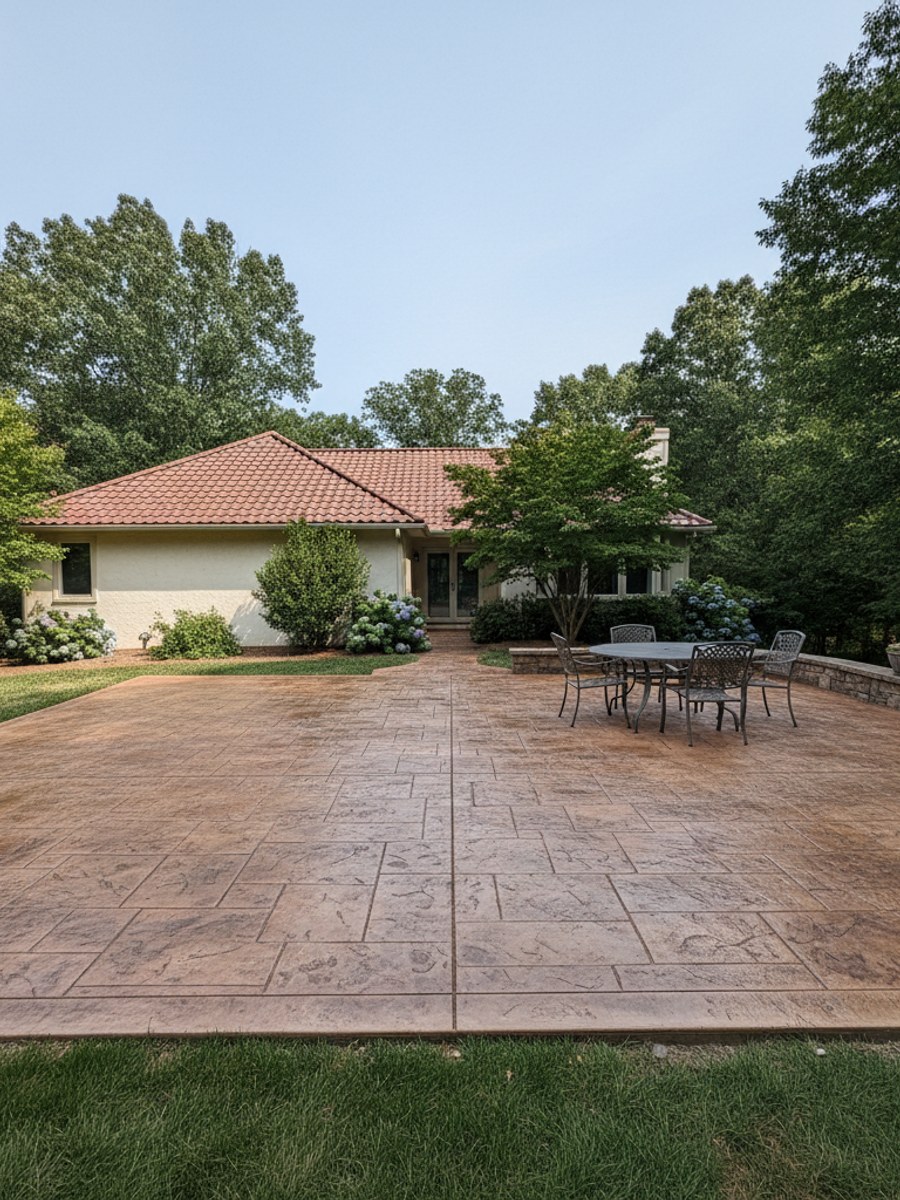
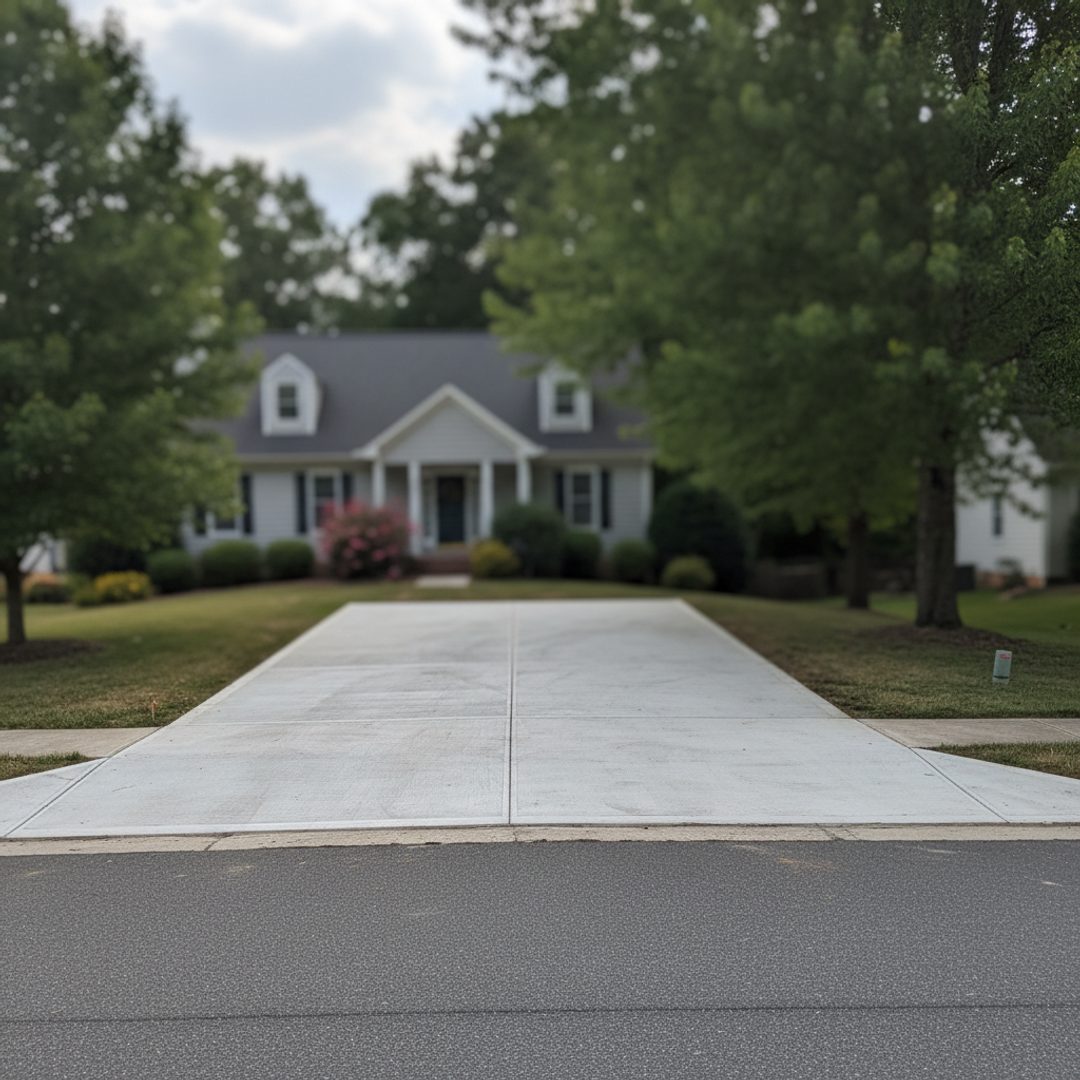
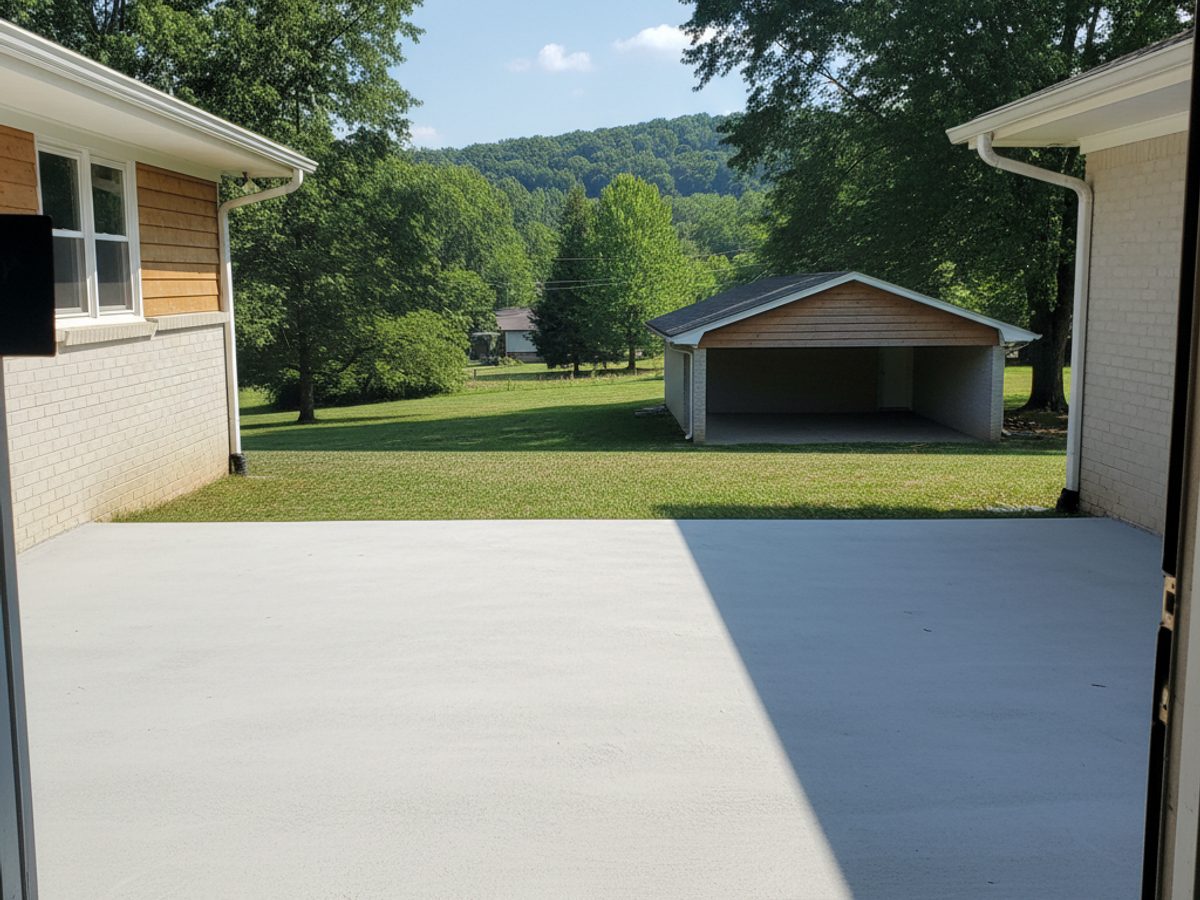
Every job below is one we do ourselves across Richmond.
A driveway takes more abuse than any other slab on the property, tires turning in the same spot, de-icer in the winter, the occasional delivery truck. A compacted gravel base of at least four inches goes down first, then wire mesh or rebar depending on the load, then a pour at a minimum four-inch thickness so it doesn't flex under a vehicle. Joints get saw-cut the same day to control where it cracks.
Patios don't carry the weight a driveway does, but they still need to drain away from the house or water ends up sitting against the foundation. Every pour slopes a quarter inch per foot minimum and finishes broom, exposed aggregate or stamped depending on what you want underfoot. Most patios cure enough to walk on in a day and take furniture in about a week.
Stamped concrete gets you the look of flagstone, brick or slate without the cost of setting individual pieces. The concrete gets colored before the pour, stamped while it's still plastic, and sealed once it's cured so the color holds up to UV and salt. The window to stamp is short, maybe an hour depending on the weather, so timing the pour right matters more here than on a plain slab.
A walkway is a smaller pour but it still needs a real base and proper joints, or it heaves right along with everything around it. Slope and finish get matched to the existing hardscape so a new sidewalk section doesn't look like a patch job. Some Richmond streets have sidewalk permit requirements, and that paperwork gets handled before the crew shows up.
Cracked, sunken or spalling concrete usually comes down to a base that failed or water that got underneath and froze. Sometimes epoxy injection or mudjacking can raise a sunken section back to grade, and sometimes the slab has to come out and get repoured. We'll tell you honestly which one your slab actually needs before quoting it.
A slab foundation for a shed, addition or garage has to sit on soil that's been compacted and tested to carry the load above it. Forms get set to exact dimensions, rebar goes in per the engineering if the job calls for it, and the pour goes to the thickness the structure requires. Get this wrong and everything built on top of it inherits the problem.
Steps take a different kind of stress, foot traffic concentrated on a narrow tread instead of spread across a slab. Each riser and tread gets formed to code height and depth, and the tread surface gets a finish so it doesn't turn slick when it's wet. A porch slab gets the same attention to drainage as any patio, sloped away from the door.
A garage floor deals with oil, de-icer salt tracked in on tires, and the weight of a parked vehicle sitting in the same four spots for years. It gets poured thicker than a typical patio slab and can finish with a broom texture for grip or a sealed finish that's easier to clean. Vapor barriers go in underneath if the garage sits over living space or gets finished later.
Resurfacing is a thin overlay poured over an existing slab that's structurally sound but worn, pitted or discolored on the surface. It costs a fraction of tearing out and repouring, but it only works if the base slab isn't cracked through or heaving. The existing concrete gets tested before we recommend it, so you're not paying to cover up a problem that'll come back.
Retaining walls hold back soil on a slope, and if the drainage behind them isn't right, the wall takes on hydrostatic pressure it wasn't built for. Drainage gravel and pipe go in behind every wall, not just the concrete itself. Curbing is a smaller job but it still needs a real footing so it doesn't shift when a mower or a car tire catches the edge.
Four steps, and no surprises in any of them.
You tell us what you want doing, we look at what is actually there, and we ask the awkward questions early.
In writing, itemised, free. If something might add cost later we flag it now rather than at the end.
Same crew throughout. We cover your floors, keep the dust down and tidy up before we leave each day.
You point out anything you are not happy with and we fix it before the invoice, not after.
A few finished driveways, patios and repairs from around the Richmond area.
Every service listed here is available across Richmond and the surrounding counties.
Questions that come up once a concrete job is actually underway.
Describe the problem and we will tell you what it probably is. No obligation.